
Salu 1000 Days
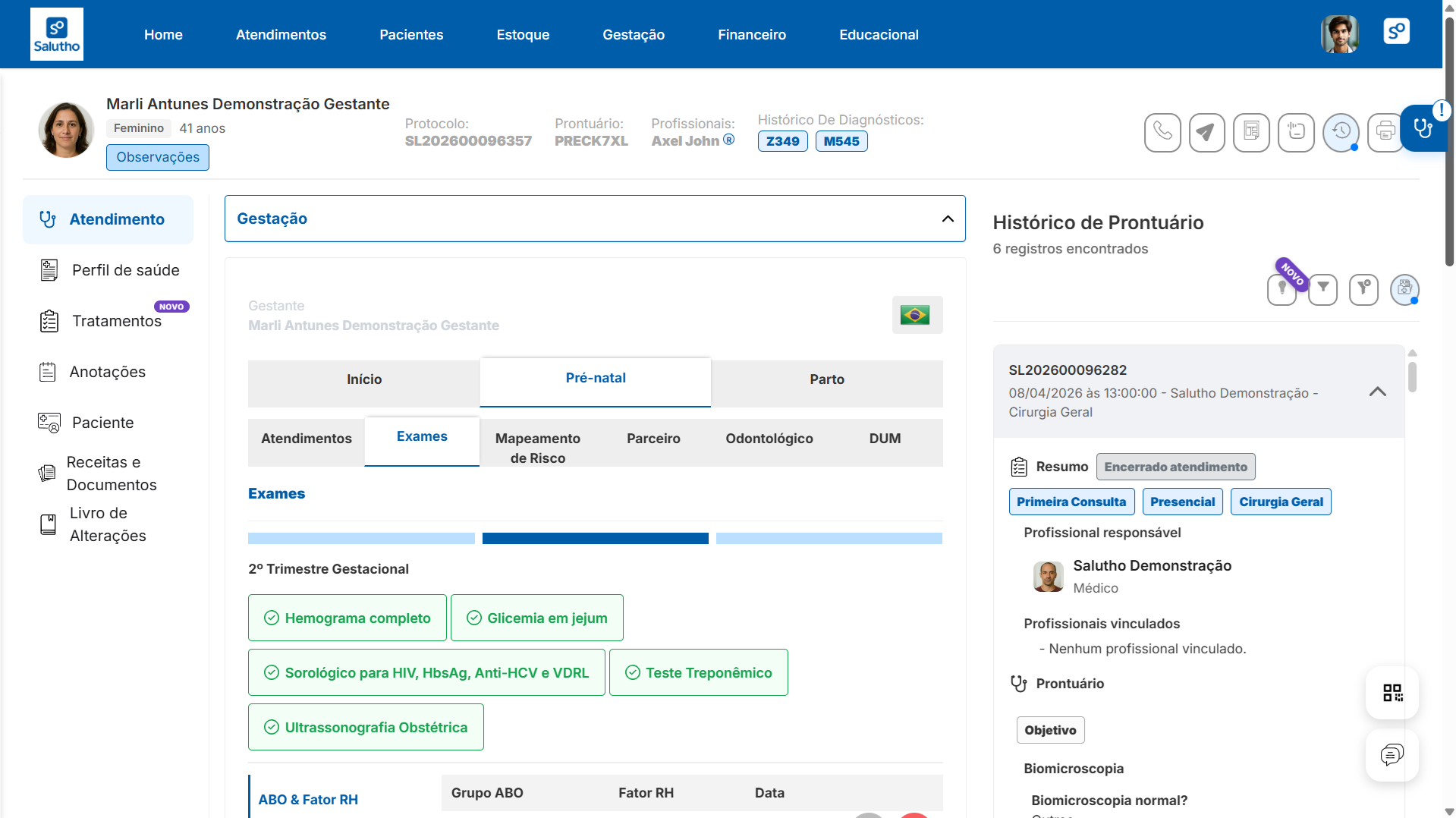
A dedicated module for maternal and child health within SaluGestor. Focused on reducing infant mortality and improving quality of life for mother and baby, aligned with UN SDG 3.1, 3.2 and 3.4 (Sustainable Development Goals).
Why maternal and child health demands a dedicated module
Despite historical progress in reducing infant mortality in Brazil, the country still faces strong regional inequality and the challenge of sustaining the pace of decline in the coming decades. According to the WHO, most neonatal deaths are preventable with adequate prenatal care and structured pediatric follow-up.
Most deaths are preventable
The WHO estimates that the majority of neonatal deaths can be prevented with adequate prenatal care and structured pediatric follow-up.
Persistent regional inequality
Infant mortality rates remain unequal across Brazilian regions, with the North and Northeast still above the national average.
Commitment to the SDGs
Brazil has national targets aligned with UN SDG 3.1, 3.2 and 3.4 to reduce maternal and infant mortality by 2030.
The Heckman Equation: up to USD 7 return per dollar invested
Nobel Prize-winning economist James Heckman demonstrated that investing in health, nutrition and education during the prenatal period and early childhood yields the highest return of any phase of human capital investment.
A well-structured prenatal care program is not just a public health tool: it is the most cost-effective investment a health system can make, reducing future costs linked to chronic diseases, cognitive deficits and social inequality.
return for every USD 1 invested in early childhood health and education (Heckman, 2008)
Adapted from Heckman (2008). The Heckman Equation.
Three pillars of Salu 1000 Days
Social impact solution
Focused on reducing infant mortality and improving quality of life for mother and baby. Aligned with SDG 3.1, 3.2 and 3.4.
Protocol automation
Simplifies and automates prenatal and pediatric protocols, reducing bureaucracy and ensuring efficiency in care.
Better care and optimized resources
Provides more personalized care for mother and baby while optimizing the clinic's health resources.
Who it's for
OB/GYNs and obstetricians
Structured prenatal care within the EHR, with automated protocols that reduce bureaucracy and help track the pregnant patient.
Pediatricians
Baby follow-up with protocols integrated into the SaluGestor EHR, without needing a separate system.
Maternal-child clinics
Multidisciplinary teams (OB/GYN, obstetrics, pediatrics) sharing the same history and protocols within a single platform.
A module inside SaluGestor. Not another system.
Salu 1000 Days is fully integrated with scheduling, the EHR and WhatsApp from SaluGestor. Your team uses one system. No duplicate registrations, no parallel apps.
Add-on module
Salu 1000 Days is available on any SaluGestor plan (Starter, Plus or Premium) as an add-on. Pricing is aligned with the consultant based on your clinic profile and contracted plan.
Talk to a consultantCommon questions about Salu 1000 Days
Do I need to sign up for a separate system?
No. Salu 1000 Days is an add-on module within SaluGestor itself. You keep using the same platform, with a new layer focused on prenatal and pediatric protocols.
What protocols does it include?
Prenatal and pediatric protocols are structured and automated, focusing on reducing bureaucracy and improving care quality. The specifics depend on the configuration done with your clinic during onboarding.
Can a solo practitioner use it?
Yes. The module is available on any plan and can be used by individual practices and multi-specialty maternal-child clinics alike.
How much does it cost?
Salu 1000 Days is a paid add-on. The price is aligned with the consultant based on your clinic size and contracted SaluGestor plan (Starter, Plus or Premium).
Can I see it in action before deciding?
Absolutely. Book a demo with a Salutho consultant. We show how the module applies to your clinic's profile and the protocols you already follow.
Let's take care of every life's beginning, together.
Book a demo and see how Salu 1000 Days fits into your maternal-child practice.